What is Aperture?
The Exposure Triangle
Photography, at its core, is simply the art of capturing light. The word "photography" actually comes from Greek words meaning "drawing with light." To draw a beautiful picture, you need complete control over how much light enters your camera.
To control this light, you have three incredibly powerful tools at your disposal. Together, they are called the Exposure Triangle. If you master these three tools, you will never need to shoot on "Auto Mode" ever again. Let's start with the first and most creative tool: Aperture.
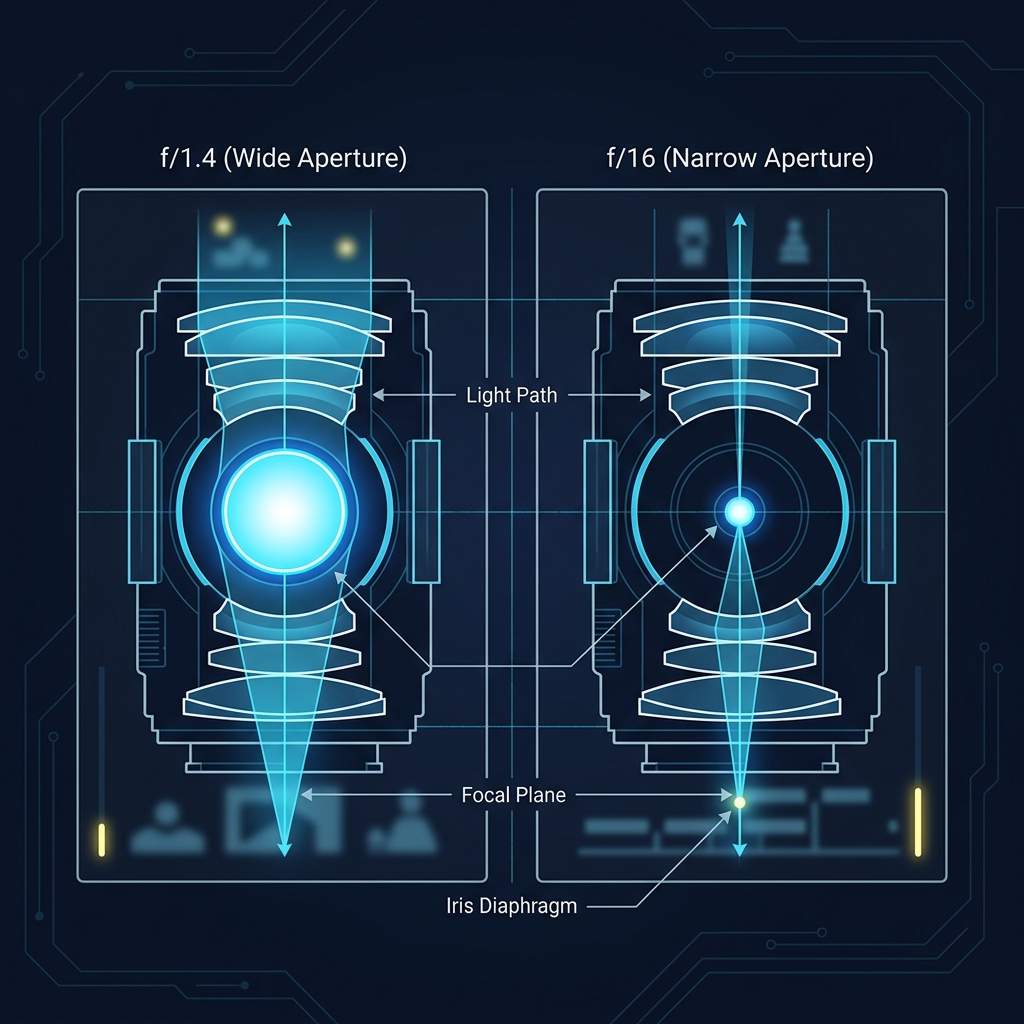
1. Aperture (The Pupil)
Imagine your camera lens is like a human eye. When you walk into a very dark room, your pupil opens up very wide to let in as much light as possible so you can see. When you step outside into the bright, blazing sun, your pupil squeezes down into a tiny dot so you don't go blind.
Inside your camera lens is a mechanical pupil made of metal blades. This is called the Aperture. You can control exactly how wide or how narrow this pupil opens. The size of the pupil is measured in confusing numbers called "f-stops" (like f/1.8 or f/16).
The golden rule that confuses every beginner is this: A smaller number means a bigger hole.
- f/1.4 or f/1.8 (Wide Open): The pupil is massive. It lets in a huge amount of light. This is perfect for taking pictures in dark rooms or at night. More importantly, a massive pupil causes the background of your photo to become incredibly blurry, which makes your subject pop out! This blur is called Bokeh.
- f/8 or f/11 (Medium Hole): The pupil is half closed. It lets in a normal amount of light, perfect for a cloudy day.
- f/16 or f/22 (Narrow/Closed): The pupil is a tiny pinhole. It lets in very little light, making it perfect for the bright noon sun. Because the hole is so tiny, everything in the picture from the grass at your feet to the mountains miles away will be perfectly sharp and in focus.
By simply changing the size of the pupil, you have completely changed how your photograph looks and feels.